
Overview
The Kemu “Blog Writer” recipe turns any instructional video or product demo into a polished blog post or tutorial article. It automates the heavy lifting in the content pipeline so you can go from raw recording to publication-ready copy with very little manual work. 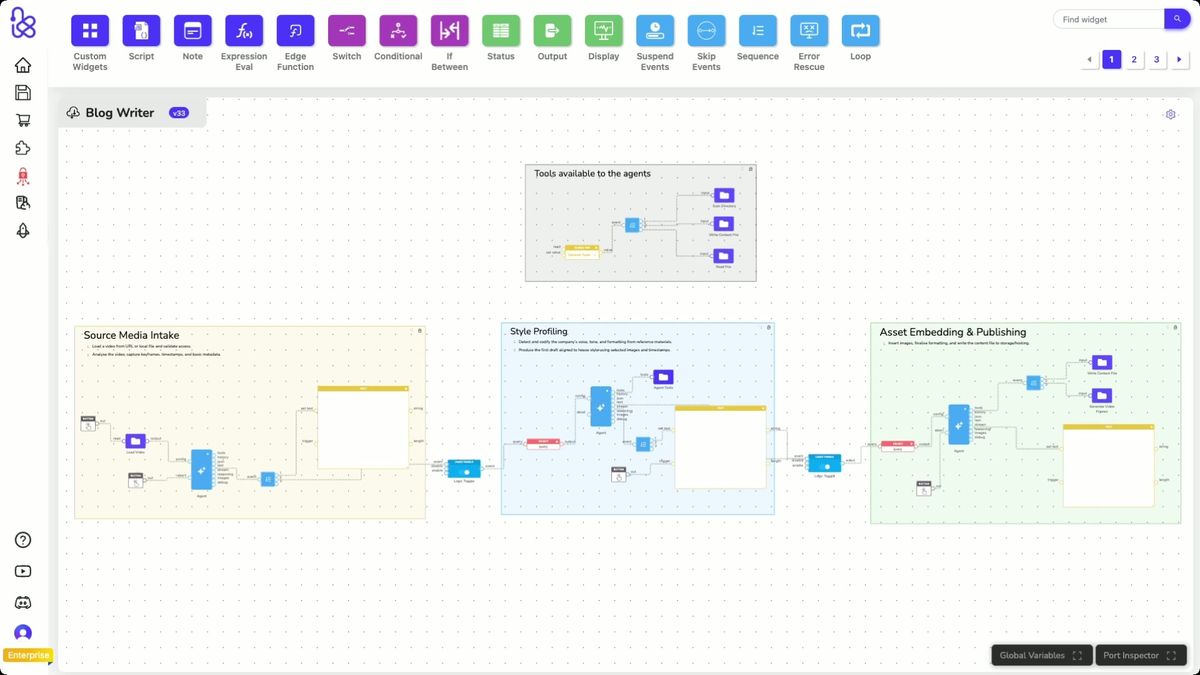
Setup
To run the “Blog Writer” recipe, you mainly need a single input: your video. Using it is straightforward. Drop a video file into Kemu or point it to a video URL, and the workflow takes over from there. The recipe is built so that the rest of the transformation pipeline runs automatically.
Main Steps
The “Blog Writer” recipe is made up of several coordinated stages, each handled by a dedicated Kemu agent.
1.Source Media Intake: This first stage loads the video from a URL or local file, checks that the input is accessible, and analyzes it to capture keyframes, timestamps, and basic metadata. 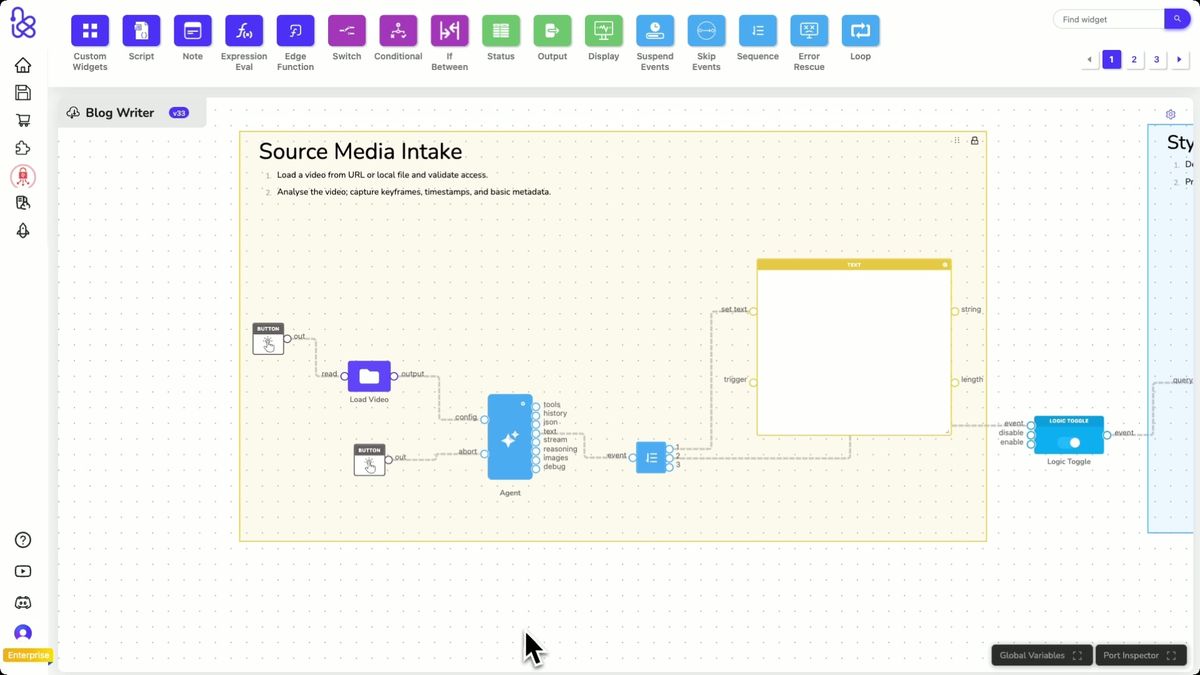
2. Pre-processing: After intake, a pre-processing step prepares the video for deeper analysis. It resizes the video and lowers the frame rate. This optimization is important for pushing longer recordings through large language models efficiently so that even multi-minute videos can be processed without issues. 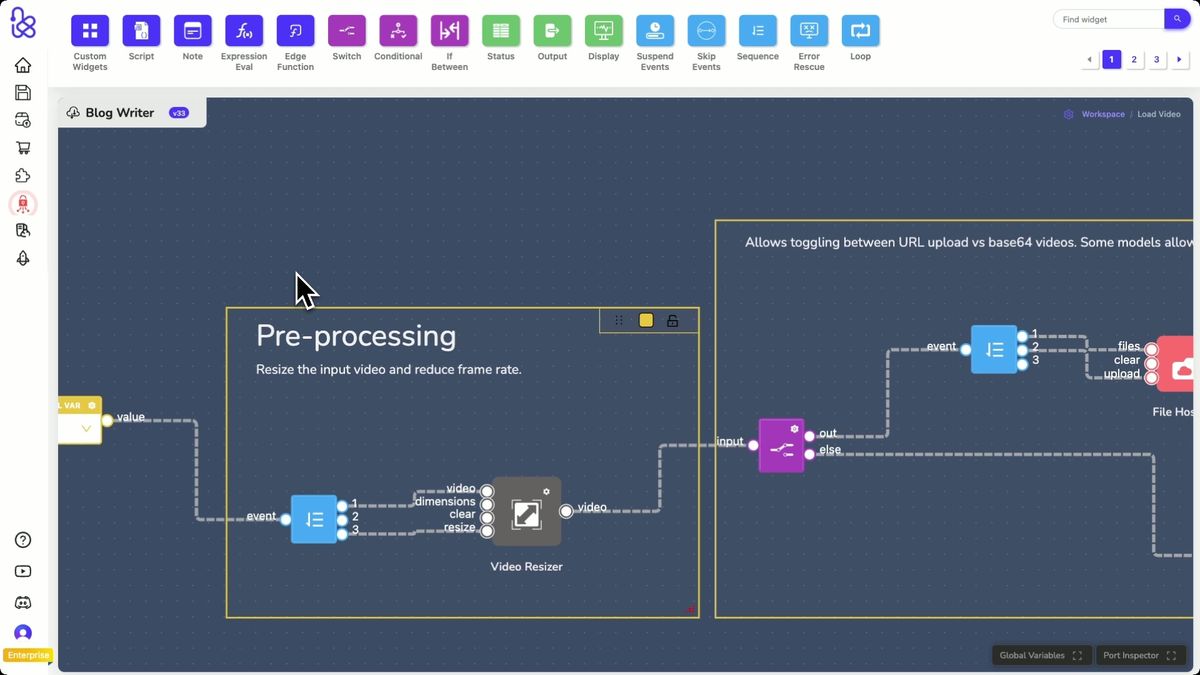
3. Style Profiling: The processed data then flows into the “Style Profiling” stage. Here, a Kemu agent learns and encodes the target company’s voice, tone, and formatting from supplied reference materials. The goal is to produce a first draft that fits your house style, while weaving in selected images and timestamps pulled from the video. 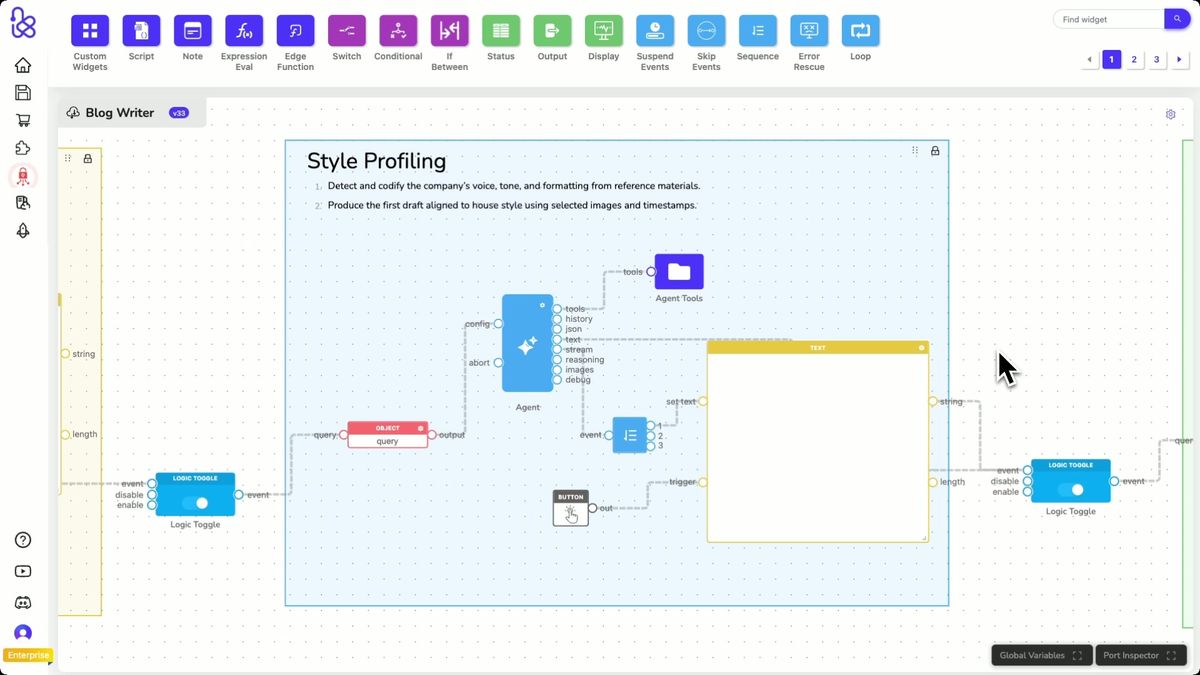
4. Asset Embedding & Publishing: In the final stage, another Kemu agent enriches the draft and prepares it for publication. It extracts frames directly from the video and embeds them inline in the article, then finalizes formatting and writes the content file so it is ready for storage or hosting. 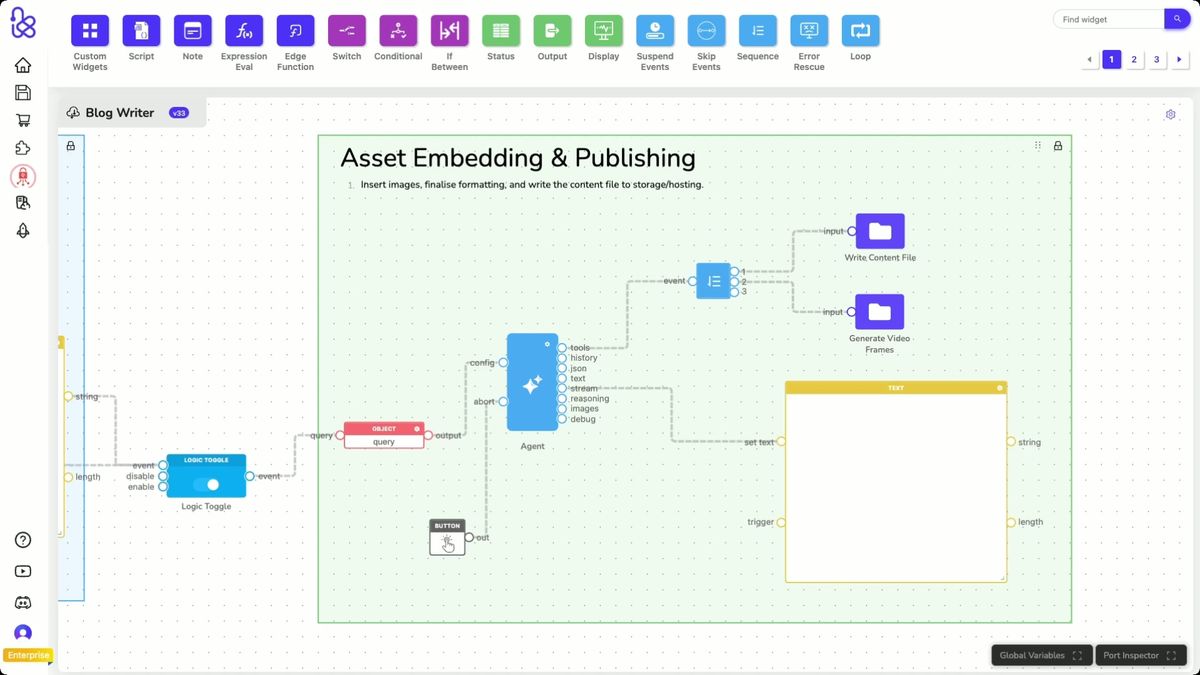
Tips
When configuring Kemu agents, especially the one used for “Style Profiling,” the Agent Settings are critical for getting high-quality, on-brand results.
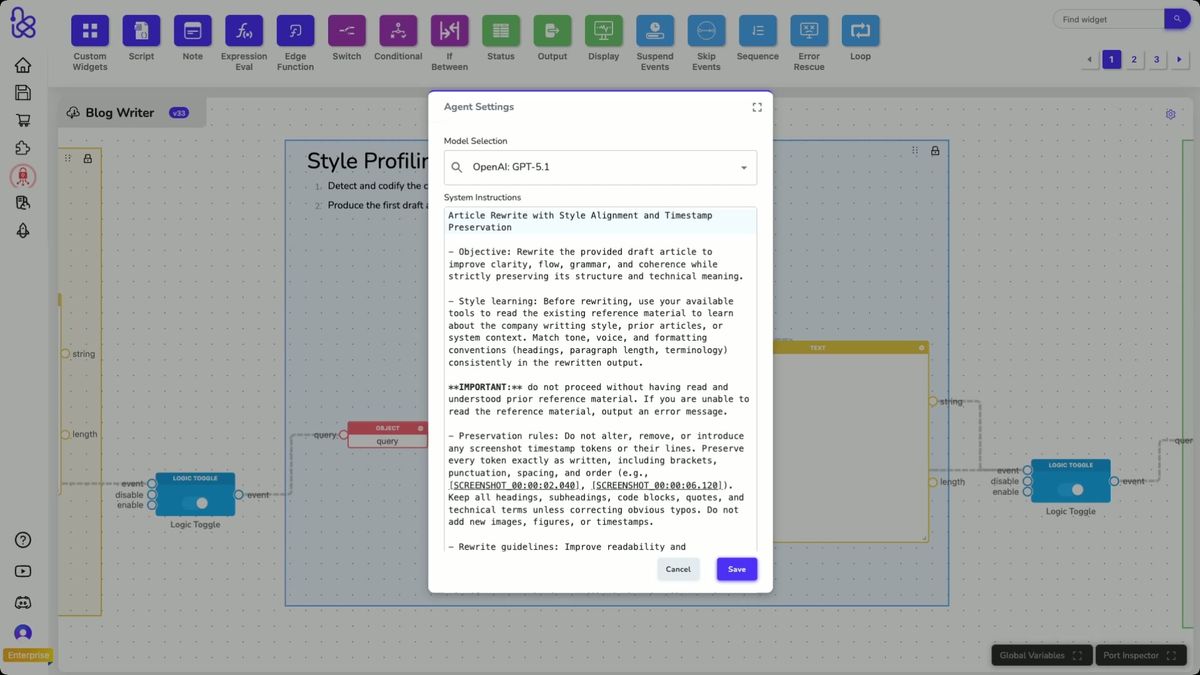
- Style Learning: Use available tools to read your existing reference materials, for example prior articles or style guides, so the agent can learn your company’s voice, tone, formatting, and terminology. This keeps headings, grammar, paragraph length, and overall style consistent with your other content.
- Preservation Rules: Instruct the agent to preserve all screenshot timestamp tokens exactly as written, including brackets, punctuation, spacing, and order. Ask it to maintain all headings, subheadings, code blocks, quotes, and technical terms unless they are clearly unnecessary. Avoid adding new images, figures, or timestamps that are not in the original video.
- Output Format: Define an output format that returns only the fully rewritten article in Markdown, with no prefaces, notes, or extra commentary. Require a final check so that the count, text, order, and placement of all screenshot timestamp tokens match the original video content exactly.
Conclusion
The Kemu “Blog Writer” recipe provides an end-to-end system for turning informal video content into professional, ready-to-publish articles. By automating pre-processing, style alignment, and asset embedding, it lets you generate high-quality blog posts directly from video and save significant time and effort. All you have to do is supply the video. Kemu manages the entire transformation pipeline and outputs a publication-ready article. If you are ready to convert demos to on‑brand articles automatically, create your first post with Kemu today!
Ready to get started with Kemu?
Build your own computer vision solutions without writing code. Start creating powerful ML and machine vision pipelines today.